
AC Compressor Problems: Signs, Causes and Repair vs Replace
How to tell if your AC compressor has a problem, what usually causes it, and how repair decisions are made.
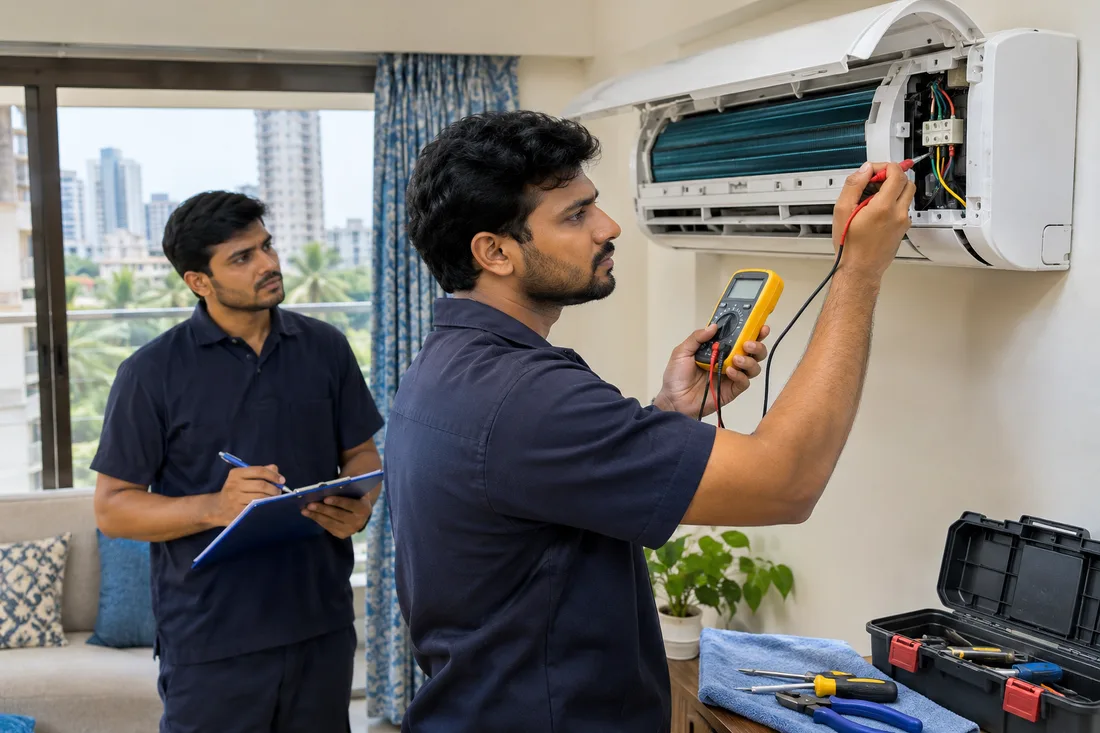
The compressor is the heart of an AC — and the most expensive part to replace. Many "compressor problems" turn out to be something cheaper, so a proper diagnosis matters.
Signs of a compressor issue
- Outdoor unit fan runs but there is no cooling at all
- Outdoor unit makes a loud humming or clicking and stops
- MCB trips as soon as the compressor tries to start
- Outdoor unit becomes unusually hot to touch
Things that look like compressor failure but are not
- Failed start/run capacitor — the compressor hums but cannot start. A capacitor is far cheaper than a compressor.
- Loose or burnt wiring at the outdoor terminal block.
- Inverter PCB fault — on inverter ACs, the board drives the compressor; a board fault stops it.
- Very low gas — some ACs shut the compressor down to protect it.
Repair or replace?
If the compressor winding is genuinely damaged, the choice depends on the AC's age, its condition and whether the compressor is under the manufacturer's warranty (many brands offer longer warranties on compressors than on the rest of the unit — check your warranty card). We explain the options and cost before any work. For an old, non-inverter AC with other worn parts, replacement may be better value; we will tell you honestly.
Need a technician?
Related repair:
In your area: